Prof. Tzipi Horowitz-Kraus
Head of the Educational Neuroimaging Group, Faculty of Education in Science and Technology, Technion
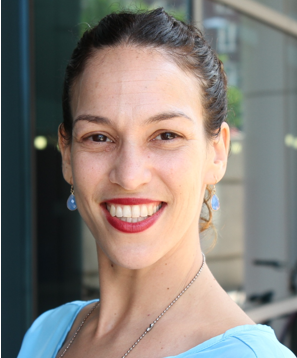
From Brain Development to Brain Signals: Studying the Growing Mind
How does a child's brain grow into one capable of reading, talking, and connecting with others? Early childhood is a time of remarkable neural change, as the brain's sensory, attention, and language systems gradually learn to work together. In this talk, we will overview how the developing brain organizes itself — and how everyday experiences, like parent–child interaction, help shape it.
Using both functional MRI and EEG signals recorded from the child and the parent, we will demonstrate how a joint interactive activity engages neural circuits that support future academic skills, and how interfering factors, such as screen exposure, affect both brain-to-brain synchronization and the child's brain organization. By quantifying how the two brains' signals synchronize over time — through measures such as coherence and phase-locking across frequency bands — we treat each parent–child pair as a coupled system and track how this coupling relates to the child's developing brain.
Future directions for multimodal models linking parent–child interaction to children's developmental outcomes will be discussed.
Vladimir Kulikov
Ph.D. candidate under the supervision of Prof. Tomer Michaeli
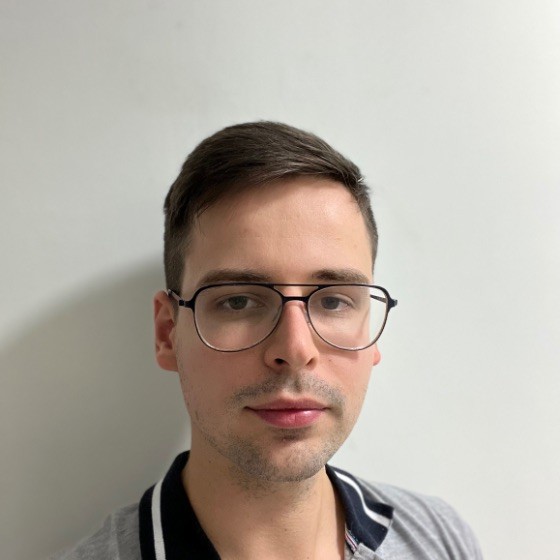
Text-Based Editing of Visual Data with Pre-Trained Flow Models: From Structure Preservation to Dynamic Changes
Recent diffusion and flow-based models have shown impressive capabilities in generating visual data from text. This talk explores how these models can be repurposed for editing existing real visual data using textual instructions in a training-free manner. In this lecture I will first introduce the motivation behind diffusion and flow models as text-conditioned generators, and then discuss FlowEdit, a training-free method for structure-preserving image editing. I will then move to DynaEdit, which tackles the much harder task of video editing where the desired edit may require changing existing motion, interactions, and temporal dynamics rather than preserving the original structure. Together, these works highlight a shift from text-based generation toward efficient, controllable, and training-free manipulation of real visual data.
Yehonatan-Itay Segman
Ph.D. candidate under the supervision of Prof. Ronen Talmon
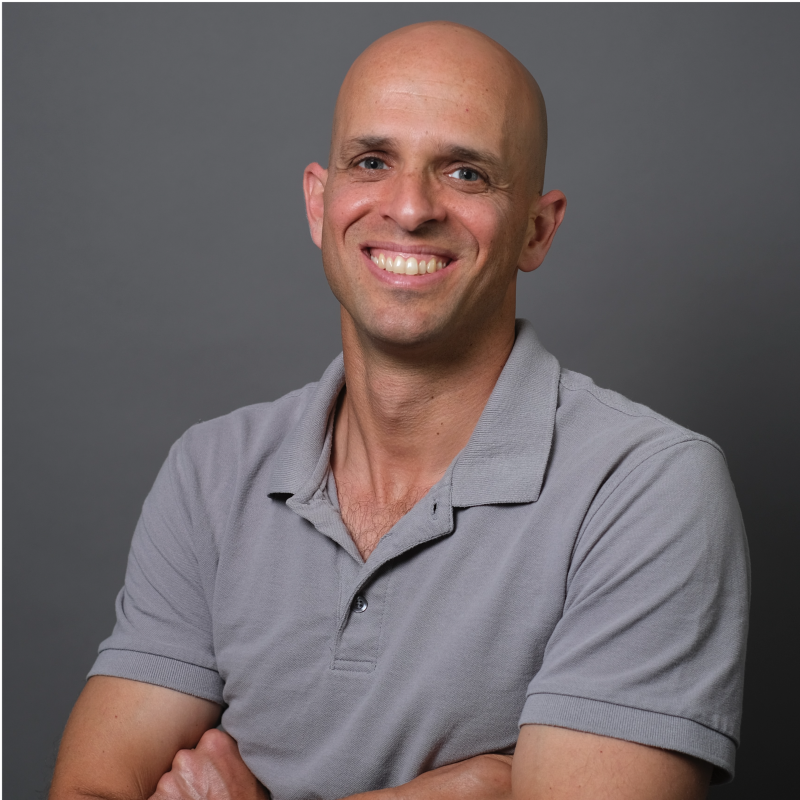
Model-Order Estimation via Spectral-Modes
We study the problem of model-order detection and parameter estimation of damped complex exponential sums from finite noisy measurements. Fourier based approaches for this problem are computationally efficient, but suffer from limited frequency resolution and windowing effects, whereas super resolution methods such as MP, MUSIC, and ESPRIT mitigate these limitations at the cost of increased complexity and greater sensitivity to noise. Recently, we introduced spectral-modes for the MP method, and showed that they are structured vectors associated with individual spectral components, that encode information about the underlying signal. Leveraging this structure, we develop robust methods for model-order detection and parameter estimation. We further show that this approach is general and extends to other tasks. For example, in DoA estimation, we define spectral-modes within ESPRIT, and leverage them for robust source detection and DoA estimation under low SNR and closely-spaced or correlated sources.